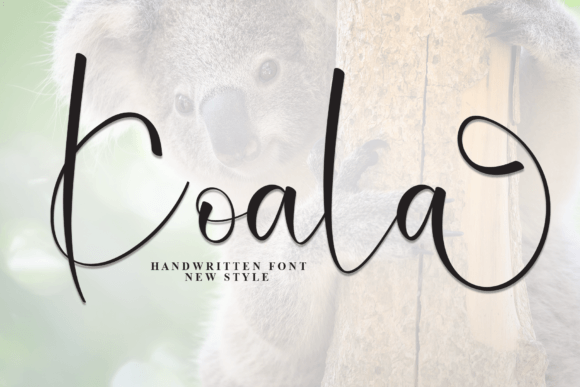
Koala Font – A Warm Handwritten Typeface for Makers
Some fonts demand attention. Others whisper. Koala lands somewhere in the sweetest middle ground. It has the kind of relaxed, flowing character that feels like it was penned by someone who genuinely enjoys making beautiful things. That matters when you create products that live in someone’s home, sit on their gift shelf, or mark a moment they want to remember.
I have tested dozens of handwritten fonts across labels, stickers, sublimation prints, and cardstock invitations. Many look promising on screen but fall apart under real production conditions. Koala is one of those rare finds that actually delivers the charm you preview without turning into a thin, fragile line on vinyl or a muddy mess at small sizes. For makers, that practical reliability is everything.
The Visual Personality That Sells Products Faster
Koala carries a gentle, rounded flow with just enough bounce between letters to feel authentically handwritten, never sloppy. There is a rhythm here that works beautifully for the kind of warmth-driven products crafters build entire shops around. Think farmhouse signs, baby announcement stickers, boutique candle labels, and heartfelt greeting cards. The typeface has what I call a quiet confidence. It does not scream for attention, but customers notice it immediately and associate it with care and quality.
When I first installed Koala and typed out a sample product name, I saw instantly why this script font would move inventory. That personal, one-of-a-kind feeling that buyers crave shows up naturally in every character. For a handwritten font, it strikes a rare balance: expressive enough to feel special, restrained enough to stay readable across dozens of product types.
Where Koala Shines Brightest
This is not the font you use for body paragraphs on a website. That is not what it was built for. Koala thrives on short phrases, product names, decorative wording, and display use. Here is where I reach for it without hesitation.
- Candle labels and wax melt packaging: The rounded letterforms add a soft, approachable feel that candle buyers respond to emotionally. A scent name like Vanilla Cedar Evening set in Koala feels like it belongs in a high-end boutique.
- Wedding welcome boards and seating signs: Elegance without stiffness. Koala brings enough formality for wedding work without feeling cold or corporate.
- Birthday invitations and party printables: The playful bounce makes it instantly festive, whether you design for a first birthday or a fiftieth.
- Boutique clothing tags and hang tags: Small shops need their brand identity to feel intentional. A price tag or care card set in Koala reinforces that handmade quality buyers expect from independent brands.
- Digital wall art and quote printables: Short inspirational phrases and family name signs look genuinely custom when this typeface carries the message. Etsy buyers purchase that personal feel over and over.
- Stickers and planner decals: Small but mighty. Even at reduced sizes, the lettering maintains enough structure to weed cleanly and read clearly.
- Coffee mugs, tote bags, and apparel: Sublimation and heat transfer vinyl projects love a smooth, flowing line. Koala cuts and presses with clean edges.
Product Presentation and Perceived Value
Customers cannot touch a product listing, but typography gives them an emotional preview of what they will hold. A label featuring Koala signals thoughtfulness and craftsmanship before the buyer reads a single ingredient or care instruction. That perception translates directly into higher willingness to pay. I have seen identical products perform differently based solely on font choice, and a premium font like Koala routinely lifts the entire presentation.
Brand consistency also strengthens when one distinctive typeface carries through packaging, tags, thank-you cards, and social media graphics. Repeat buyers begin recognizing your style at a glance. That recognition builds trust, and trust builds a sustainable handmade business. Koala’s distinctive yet versatile personality makes it a strong anchor for a cohesive brand identity without overwhelming other design assets.
Cutting Machine Readability and Production Notes
Practical makers care about how a font behaves on the mat. I have cut Koala at sizes as small as half an inch on adhesive vinyl for jar labels, and the results stayed clean with minimal weeding issues. The character strokes have enough consistent weight to prevent tearing, yet they are not so thick that counters fill in around letters like a and e. For Cricut and Silhouette users, that sweet spot saves hours of frustrating test cuts and wasted material.
For printed work, I recommend testing at 10 to 12 points for card inserts and smaller tags. The font holds its shape nicely at those sizes on quality cardstock. On textured papers, slightly increasing the size preserves the intended softness. When previewing product mockups, Koala looks natural and convincing, which helps images perform well in listings and on social media graphics.
Pairing Koala for Maximum Impact
An expressive script font reaches its full potential when paired thoughtfully. Koala works beautifully alongside a clean sans serif font for contrast. I often set product names or main phrases in Koala, then use a light, simple sans for descriptions, ingredients, or supporting details. The combination feels polished and intentional rather than busy.
For a different look, try pairing Koala with a delicate serif font for a layered, editorial quality that suits wedding stationery and formal invitation suites. The handwritten warmth of Koala softens a traditional serif beautifully. For bold product packaging and logo design, contrast Koala’s flowing curves against a sturdy display font or a condensed sans. The tension between organic and structured creates visual interest that catches the eye in crowded marketplaces.
Good font pairing is not about matching. It is about complementing. Let Koala carry the personality, and let the secondary typeface handle clarity and structure. That approach consistently produces packaging design and product layouts that feel professionally designed, even when you are a one-person shop working from a kitchen table.
Checking What Is Included Before You Start Designing
Before committing a font to a product line, I always verify what the file delivers. For Koala, spend a few minutes exploring the character map for any included alternates, ligatures, and swashes. Those extra characters can elevate a simple product name into something that looks truly custom-lettered. Even one alternate letter can transform a standard label into a piece of modern typography that stands apart from competitors using basic default characters.
Standard file formats in the Script Amp Fonts category typically include OTF and TTF options. OTF files often support extended features and smoother curve rendering, which benefits users working in professional design software. If multilingual support is included, you gain even more flexibility for international products, bilingual packaging, and customer bases that reach beyond English-speaking markets.
Commercial Licensing for Product Sellers
This part matters deeply. When you sell physical products, templates, printables, SVG designs, and merchandise, you need a commercial font license that actually covers your business activities. Standard desktop licenses rarely extend to the ways crafters use typefaces. Before listing anything made with Koala, verify that your license permits use on physical items for sale, digital downloads, print-on-demand products, and client work. Some foundries require an extended license for anything sold in a templated format, including editable invitations and branding kits.
A clear licensing situation protects your shop and gives you the confidence to scale without worrying about takedowns or disputes. It also respects the type designer who created a creative font you now build a business around. Treat font licensing as a serious production investment, similar to buying quality blanks or reliable equipment.
Why Koala Stays in My Regular Rotation
Some fonts get used once and forgotten. Others become default go-tos that earn their place in file after file. Koala fits the second category. It works across seasons, from spring market prep through holiday product launches. It handles valentine sweetness just as naturally as autumn candle collections. That versatility means I return to it frequently, which also creates a subtle visual thread across different product types in my shop.
For web design applications like shop banners, product highlight images, and email headers, Koala adds a personal touch that generic system fonts cannot match. Since so much of a handmade business lives online, those small typographic choices compound into a strong, recognizable presence over time.
The font market overflows with options, but finding a handwritten font that genuinely balances beauty and production reliability is harder than it seems. Koala brings that balance with a warmth that feels intentional rather than trendy, which keeps products looking current year after year. Whether you stamp it onto leather tags, cut it from glitter vinyl, or print it on textured paper, it holds its personality without demanding that everything else in the design step back.
For makers building product lines that depend on emotional connection and repeat customers, that kind of reliable charm is exactly what turns a simple typeface into a genuine business asset.